
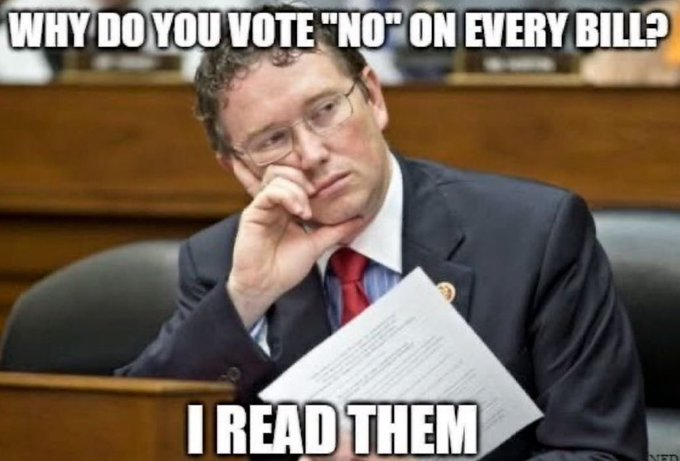
You ready?
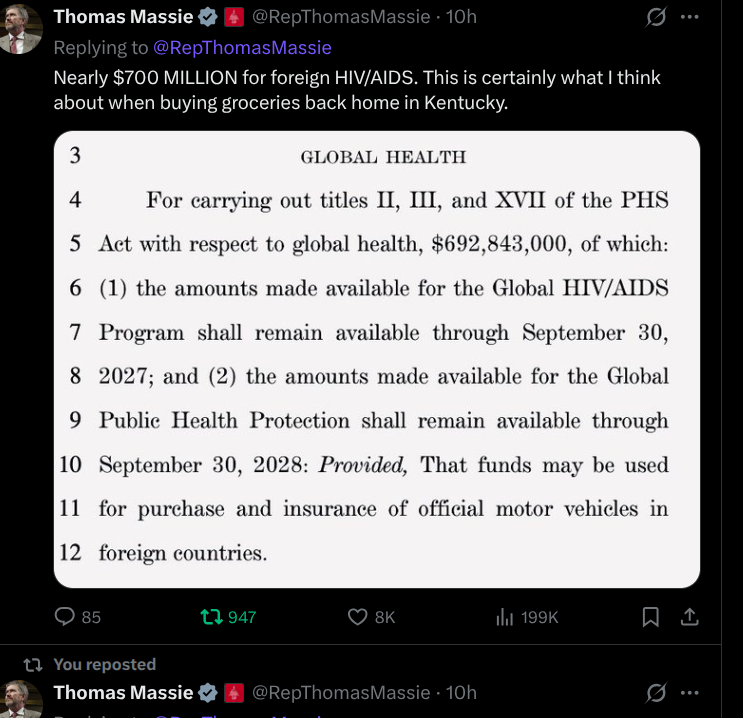
3.3 BILLION to is ra el:

Woops – there’s more for the parasites:



Then there was what was left out:
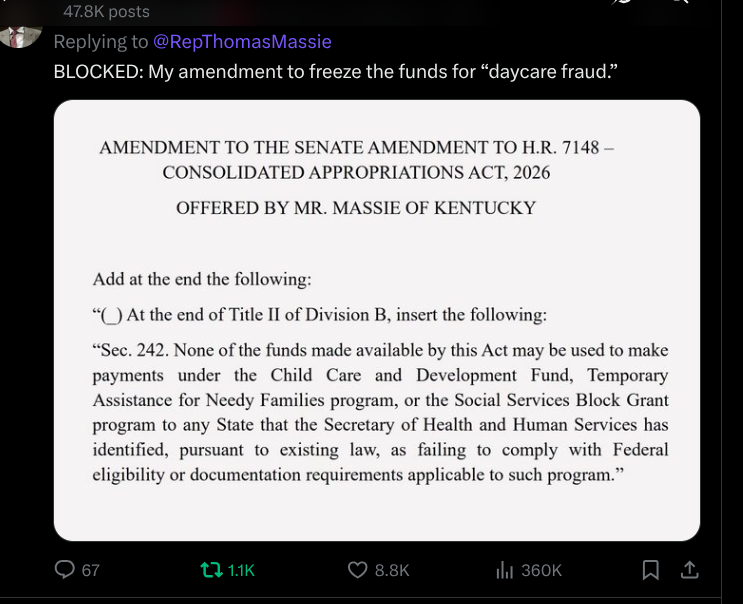




Now you understand why I’m so incensed. If I weren’t in need of help and services, if I had the money on my own to get myself training, if I had the $$ means to get into housing, I’d just look at this, roll my eyes and think one of two things: just another movie scene designed to rile up the masses (and it has worked) or just another day of bullshit in government. But I am not in that situation to just be ok with all of this. Not when there are BILLIONS still earmarked for non-citizens while I go without access to those services.
THIS IN SPADES.



I’ve lost about 20 followers on X today because of the things I am sharing. I love what she has to say. This system is toxic. It is not inclusive. And it punishes people who struggle to keep up with it. That is the sickening part to me. People aren’t lazy. Some simply carry the knowing how toxic this reality is – and those are the ones most often targeted and harmed – who walk alone. We are not the problem.
Trauma Aware America
·
It’s easy to think people are just stupid when they argue passionately in defense of billionaires and corporate power. Most of the time, they’re not billionaires themselves. They’re struggling with healthcare costs, stagnant wages, insecure housing, or mountains of debt. Yet they still say things like: “The rich earned it,” “You just want handouts,” “Nobody’s stopping you from becoming a millionaire,” or “Taxing wealth is theft.”
At first glance, this looks like pure delusion. But from an interpersonal neurobiology perspective, these responses are survival strategies.
The people defending billionaires here are doing it because it feels safer than the alternative.
If you’re struggling in a system that keeps failing you, it’s terrifying to admit that it might be rigged. (KEY) That would mean you’re vulnerable, unprotected, and your suffering isn’t entirely in your control. And in a culture where personal responsibility is a moral identity, admitting you don’t have control is deeply shame-inducing. It’s easier to believe the world is fair, that success is earned, and that anyone can make it if they just try harder. That belief helps people stay regulated. It helps them keep moving. It’s not rational, but protective.
There’s also a fantasy at play. If I might be rich someday, then criticizing the rich feels like criticizing my future self. This fantasy of upward mobility becomes part of personal identity, even when statistically it’s wildly unlikely. So people cling to it because giving it up feels like despair.
Then there’s the story we’ve been sold our whole lives. That billionaires are job creators. That they take the risks. That they built this country. That if we tax them too much, they’ll stop making cookies and the rest of us will starve. Never mind that workers make the cookies, that wealth has been hoarded not reinvested, or that massive inequality destroys trust and shared safety. The myth of billionaire virtue is everywhere. People absorb it through media, education, religion, and repetition. It becomes background noise that shapes their entire worldview.
And when someone challenges that worldview, it creates dissonance. That dissonance can feel physically uncomfortable. Defensiveness isn’t just mental—it’s bodily. From an IPNB lens, nervous systems under threat often default to rigid thinking, black-and-white logic, and scapegoating. So instead of being able to think relationally–seeing how our well-being is interconnected–people double down on hierarchy and blame.
That’s why you get so many arguments like these:
“I worked hard and succeeded, so others must be lazy if they didn’t.”
“Capitalism means profit. If you want the profit, start your own business.”
“Taxing wealth punishes success.”
“The poor are poor because they spend irresponsibly.”
“This country gives you freedom to succeed. Don’t be a victim.”
These arguments all share the same purpose: to protect a fragile sense of control, worth, and safety in a system that doesn’t offer much of any of those things. They reflect internalized shame, absorbed propaganda, and a lack of real-world comparison to systems that function differently. Most importantly, they reveal a nervous system trying to find coherence in a world that feels chaotic and unsafe.
The real conversation we need isn’t about whether billionaires deserve their wealth. It’s about what kind of society supports well-being for everyone. That starts with connection, fairness, mutual care, and a system designed to reduce, rather than exploit human stress.
Lastly, check this one out. My immediate thought was “that’s a young Barron”.
What did I say last night? EPSTEIN ISLAND IS A HONEYPOT. (this guy is not yet considering that possibility)