more expansion on last night’s video w/lisa harrison and the discussion of 12/21/2019…….
******

Published on May 20, 2019
Your Official Go-To Blog on Ascension, New Earth, Spirituality, UFO's, Real History, New Technologies and All Things Alternative

more expansion on last night’s video w/lisa harrison and the discussion of 12/21/2019…….
******
Published on May 20, 2019
He was a Democrat…intersting..Twins?
Changed his Cargo pants… to khakis? pic.twitter.com/dmhQ5kwfnK— FireBunny (@FireBunny63) August 4, 2019
someone captured and shared the images below:
a bit ago in a moment of quiet i had a feeling – “Q” is the last scene of the movie here in this experience…….
******
Published on Aug 2, 2019
interesting, very insightful conversation…like lisa i have been seeing the #7 like crazy this past week. …. i am reminded of a session i had with Dave Cowan – who passed on to Home about 2 years ago. i recall his words that we know we are at the “end” when the chemtrails end…he also spoke of the 7 year span between 2012 and 2019 and if my memory is correct, he said the real mayan/end times calendar was december 2019. interesting we see this date mentioned below…i indeed align w/their perspective that “ascension” is the uniting of our consciousness here and at home and exiting this realm….
******
Published on Jul 31, 2019
a VERY timely piece…it is INDEED a trap and “they” set it up to be that way……what is the most disheartening is when you have others in your life who aren’t in this trap – who are doing well – and give ridiculous, often thoughtless “advice” instead of being truly supportive and helpful….and as much as i feel pain and anger towards the homeless population and how brazen they are becoming in terms of theft – i get it. they have had it and are taking from those who “have”. ENOUGH OF THE MADNESS!
******
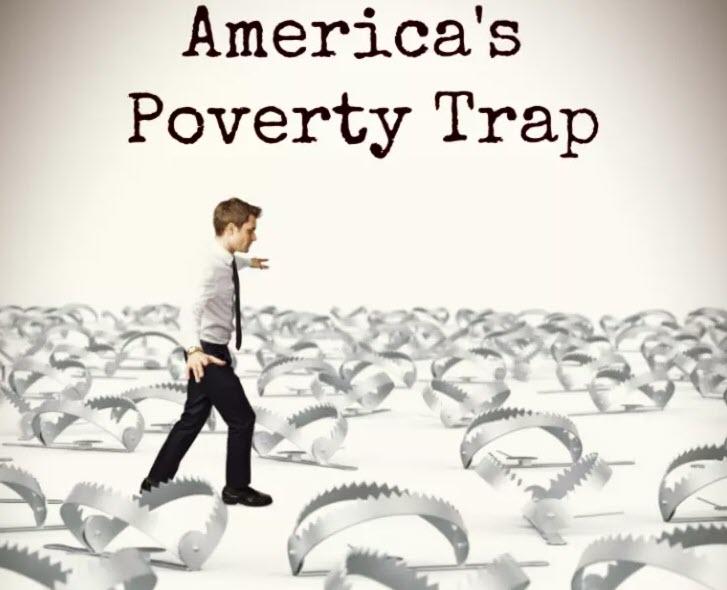
Authored by Daisy Luther via The Organic Prepper blog,
The problem with poverty in America is that the system is designed to keep you poor. Maybe it’s just because poor people are easier to control. I have written before about how to survive when you’re so broke that you can’t pay your bills and while the comments were largely supportive, there are always a few smug, superior souls who blame the people who are struggling for their problems. The thing is, poverty is a trap, and one seeming small setback can spiral into a disaster from which you cannot extricate yourself.
When you are living a financially fragile life, it seems like someone somewhere is trying to keep you poor. Why is it so hard to get ahead? Well, because the system is rigged against you when you’re living paycheck to paycheck with fee after fee after fee. Because what makes more sense than charging someone who already can’t pay their bills even more money?
First, there are the fees. We’ve written here about undisclosed fees that most people are being hit with, but bank fees are even worse.
If you bounce a payment by so much as a penny, then you are hit with a charge from your bank and most times, a charge from the business that was taking the payment from your account. Most banks charge anywhere from $25-$38.50 when you have non-sufficient funds for a payment. Businesses charge in the same range, so that means that if one payment goes awry, you can lose $50-$77 in the blink of an eye.
Banks love NSF and overdraft fees. Why? Because in 2017, Americans paid $34 billion in fees for not having enough money to cover a payment.
Some of these fees come from the automatic payments that come from our accounts. Mortgage, car payments, insurance payments, and other bills are often automatically debited. Other fees come when a person has “overdraft protection” on their debit cards. This is when a person doesn’t have enough money in his or her account for a debit to go through but their credit union or bank covers it anyway.
The government’s Consumer Financial Protection Bureau explains just how insane these fees are. (Emphasis mine)
Today, the Consumer Financial Protection Bureau (CFPB) released a report that raises concerns about the impact of opting into overdraft services for debit card and ATM transactions. The study found that the majority of debit card overdraft fees are incurred on transactions of $24 or less and that the majority of overdrafts are repaid within three days. Put in lending terms, if a consumer borrowed $24 for three days and paid the median overdraft fee of $34, such a loan would carry a 17,000 percent annual percentage rate (APR).
“Today’s report shows that consumers who opt into overdraft coverage put themselves at serious risk when they use their debit card,” said CFPB Director Richard Cordray. “Despite recent regulatory and industry changes, overdrafts continue to impose heavy costs on consumers who have low account balances and no cushion for error. Overdraft fees should not be ‘gotchas’ when people use their debit cards.” (source)
So to be clear, the banking system is set up to take the most money from people with the lowest balances.
Imagine you have a bill that attempts to debt from your account twice, costing you $50. Then another payment, a smaller one, that would have gone through if the other bill hadn’t gotten there first, bounces too. Now you’ve lost $75. It’s pretty easy to see how another payment – even one for a few bucks, could bounce next. Now you’ve lost $100.
By the time you actually have the money to cover all the fees, how on earth are you supposed to pay the bill that put your in the negative in the first place?
I know what a lot of you are thinking. “I’ve never bounced a check in my life” or “these people need to get control of their spending and they wouldn’t have these fees.”
But this vicious spiral can be caused by something as seemingly trivial as a person’s pay being direct-deposited one hour late on payday. It can occur when payday is on a Saturday but your funds won’t be deposited until Monday but your debits are still coming out regardless that it’s a weekend. It isn’t always personal irresponsibility that causes a person to be unable to cover the payments coming out of his or her account.
Once you’re in the hole for a couple hundred dollars in NSF or overdraft fees, how in the world do you get out? If your financial situation is so precarious that one bounced payment causes this cartwheel of non-sufficient funds, how are you supposed to ever get caught up?
Next, there are late fees and the re-connect fees.
If one of the payments that went awry in your overdraft avalanche happens to be a utility bill, things get even worse for a person who is struggling. Particularly if you aren’t able to cover the bill in sufficient time to keep your utilities from getting shut off. How much you’ll be charged varies by company but if they really feel like you’ll have trouble paying in the future, they stick it to you, making it nearly impossible to get your power or heat turned back on. Here are some examples
They can be charged late fees by all sorts of businesses. Now they’re really in trouble.
A payday loan can be one way a desperate person chooses to get out of financial trouble.
Payday loans are short-term cash loans based on the borrower’s personal check held for future deposit or on electronic access to the borrower’s bank account. Borrowers write a personal check for the amount borrowed plus the finance charge and receive cash. In some cases, borrowers sign over electronic access to their bank accounts to receive and repay payday loans.
Payday loans range in size from $100 to $1,000, depending on state legal maximums. The average loan term is about two weeks. Loans typically cost 400% annual interest (APR) or more. The finance charge ranges from $15 to $30 to borrow $100. For two-week loans, these finance charges result in interest rates from 390 to 780% APR. Shorter term loans have even higher APRs. Rates are higher in states that do not cap the maximum cost.
CFPB found that 80 percent of payday borrowers tracked over ten months rolled over or reborrowed loans within 30 days. Borrowers default on one in five payday loans. Online borrowers fare worse. CFPB found that more than half of all online payday instalment loan sequences default. (source)
Now a bad situation has gotten even worse. You’re only getting a portion of your paycheck which means that you’re not going to be able to meet future bills. You’re going to face more late fees, more NSF charges, and more overdraft interest.
If you’ve ever wondered why broke people tend to stay broke, this is why. Unless the person in financial trouble gets some kind of windfall, they’re going to have great difficulty getting back on their feet. In many cases, it’s impossible.
And that isn’t the only bad part of the war on the poor. Homelessness has been practically criminalized. Here are some examples of how poor or homeless people can get in trouble with the law.
The criminalization of homelessness refers to measures that prohibit life-sustaining activities such as sleeping/camping, eating, sitting, and/or asking for money/resources in public spaces. These ordinances include criminal penalties for violations of these acts.
There are multiple types of criminalization measures which include:
- Carrying out sweeps (confiscating personal property including tents, bedding, papers, clothing, medications, etc.) in city areas where homeless people live.
- Making panhandling illegal.
- Making it illegal for groups to share food with homeless persons in public spaces.
- Enforcing a “quality of life” ordinance relating to public activity and hygiene. (source)
Of course, not all people financially struggling are out on the streets. Many are quietly struggling in middle-class neighborhoods, in nice homes, driving a late-model car. If they’re upside down in their mortgage or car loan, selling those items is not an option because then they’ll still be making the payments but be without a way to get to work or a place to live.
If they file for bankruptcy, good luck to them getting a cheap place to reside.
Things get harder.
And harder.
And harder.
You may already be in financial trouble, or you may just be in a situation with no emergency fund. If that’s the case, you should know that it only takes something small to send you straight to financial disaster.
Here are a few tips to help you avoid the pitfalls of poverty.
Know that you aren’t alone if you’re facing these kinds of problems. Many people in our country are deeply in debt, living paycheck to paycheck, and struggling to pay for basic necessities like food, rent, and medical bills.
Don’t look for things to become more affordable or for your paycheck to magically increase. That’s not the direction we’re going in America. Your only options are to reduce your expenses, eat cheaper food, and bring in some extra cash. If you get a windfall, use it wisely to build a financial cushion.
The American poverty trap keeps poor people poor. And it’s easier to fall into than you think.
End ALL disease! Lyme. Candida/fungus (which has been sprayed on us). ALL inflammatory diseases. Return ALL that was taken from us so that we may live Fully Conscious, Healthy, Abundant lives in Freedom as we Originally did. SO BE IT NOW.
&
Trump just promised to cure cancer. Yes, really. pic.twitter.com/K8lKOI2WoD
— Aaron Rupar (@atrupar) August 2, 2019
;
Jeffrey Epstein became an FBI INFORMANT to secure sweetheart deal and shut down federal probe
Mario Lopez: ‘Dangerous’ for Parents to Allow Their Children to Chose Genders
Breaking: US Working on Major Troop Withdrawal from Afghanistan in Negotiations with Taliban
FBI Document: ‘Conspiracy Theories’ About the Deep State Are a New Domestic Terrorism Threat
no words…
New York City Store Owner Beaten by ‘Pack of Teens’ For Wearing MAGA Hat
Master Troll Trump Said ‘No Strategy’ Behind His Bashing Baltimore. But Of Course There Was.
Mitch McConnell Gets 13 More Trump Judges Approved Before August Break
verifying that (C)oats was the last piece blocking the (D)eclas….and looks as though bigger charges coming for Comey…
******