By Dima T., & The First Contact Ground Crew Team, 11/22/2016
Greetings Love Beings!
Final Event Energy Update ~ Love Is Being Unleashed It’s Gonna Get Wild And Crazy
Another 11:11 portal day; Happy 22, Independent Birds!
4 – 5 – 6 – 7 layers of the heart were healed. That took 6 hours of work. Father reconfigured and completed phase 2 of Mother Gaia Mother Earth’s Heart surgery on behalf of the Collective. Tonight we have 8 – 9 – 10 – 11 – 12 and the Last Seal.
3:13 am Crank up in Energies.
At 6:27 a.m there was an another increase in the Energies; Love is Being Released in a Big Way Today. Interesting Message From Master Saint Germain: ”Get Off Your Knees take action in love Or On Your Knees Continuing Pain n Suffering, These will Be The Choices. Ignorance and Ego Does Not Reign On This Planet. This Planet Belongs To The Lovers And Givers So Be It And So It Is. On behalf of the Galactic Federation of Light and all Creation we Serve Love and We Serve Mother And Father. Who Do You Serve Is The Question For You Today being Many May be experiencing Shot Out Of The Canon that’s gonna be common. If You feel Like You Can’t Keep Up. Surrender.”
You are on the fast track to Unity Consciousness This is about all of us not the self. Id=EGO that’s to be dissolved.
Rest Assured all Buttons Have been Pushed Alarms Are Going Off Triggers Are Being Triggered for Release; Laugh Cry Dance it out. Love has Been Unleashed.
Energies Are Getting Increasingly Precise And What That Means is that we’re gonna move faster and faster Ding and you’re gonna have to JUMP. Surrender And Jump; Surrender And Jump.
Bodies are Going Through MAJOR Recalibrations. Bone Structure Being Realigned, Body Cracks, Brain Chambers Updates, Organ Restorations, And Root To Crown Chakra upheavals. All Masonic Tweaks To Bodies And Manipulations Are Being Undone And Bodily Functions Being Restored. Love Is Being Unleashed it’s Gonna Get Wild And Crazy Yeeeeehaaaawwww!!!
Editor’s note: I get excited when I read things like this for the simple fact in that it validates my experience. For me, the past 2-3 days I have been UNBELIEVABLY tired 2-3 hours prior to when I normally go to sleep. I crawl into bed and just like you will read below, I do not get much sleep. I have also been having a sore/scratchy throat. The zombie thing, that has been on and off again all year.
The last few days have been a combination of unusual and ‘heavy energy‘ – As in feeling very tired, ‘run down’, cough/sore throat and the need to rest or go to bed earlier but then not getting a lot of sleep. Feeling dizzy or lightheaded, or like a zombie – it will vary…as it weaves in and out.
We recently had a very big ‘elevation’ energetically with the super moon energy and now is the other swing of the pendulum.
We are upgrading and releasing our old DNA/Blueprint and memories of the ‘past’ which are Generational…so this is not only for you that you are releasing, this is so much bigger than this!
One can feel they are ‘losing’ it and this seems to be felt by those at the ‘forefront’, so not all will be feeling this as intensely and deeply.
This is not only the old DNA/Blue Print, this is GENERATIONAL we are feeling and healing…this is what sets this apart from other ‘old’ releases and upgrades that we have been through, at this time.
As this has been very painful especially for those who have suffered trauma and abuse, ptsd and the like…and then add into that what our genetic line has been through as well that we have ‘brought through’ with us.
So this is not only going back down the line, this is also going forward down the line as well. Both, past and future as well!
Also while going though this we have been open and have not been able to ‘help it’ as in how we are feeling. If we are to release what we are, no processing or protection has been able to ‘prevent’ what we each have needed to feel to release during this, please know this.
If you are doing fine then that’s great…if you are feeling the energies and are managing that is even better…this is for those that may have been ‘knocked over’ severely, as this was pushing one to the edge and then over.
To those souls, I say to you, hold on the best you can as this is very necessary as this is such a massive ‘clean out’.
You are breaking the link/cycle (pain) of the past AND the future as you are strong enough to do so, yes you. And I am right here with you, the ‘ground crew’, at the forefront doing the ‘hard yards’, as not all are doing so in this way…and for this we will and are being ‘rewarded’ for in doing so.
Remember – “This too shall pass”.
As after the ‘storm’ comes the calmer waters.
Much Unconditional Love, Truth and Honesty,
Anastacia Ascension Guide/Teacher Multi-Dimensional Ancient Earth Master Trailblazer/WaySeer
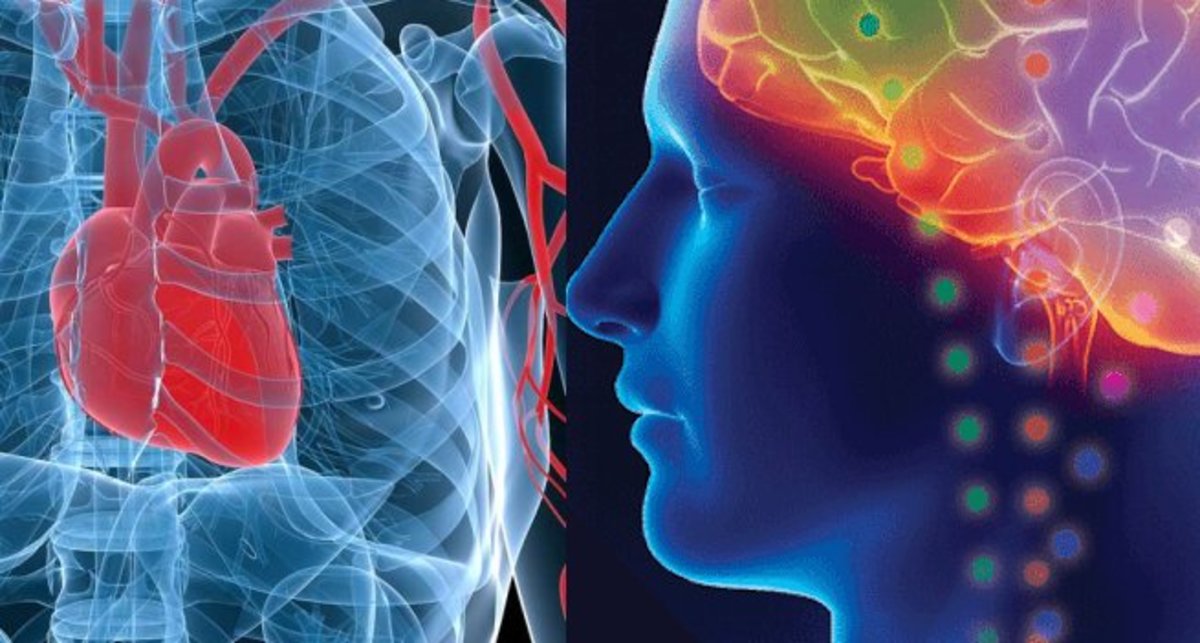
The idea of transplanted cellular memory emerged as early as 1920 in the film “Les Mains d’Orleac” written by science fiction writer Maurice Renard. A second brain in the heart is now much more than an idea. Prominent medical experts have recently discovered that many recipients of heart transplants are inheriting donors’ memories and consequently report huge changes in their tastes, their personality, and, most extraordinarily, in their emotional memories. Today new science is testing the theory that the heart is involved in our feelings. So what have they discovered so far?
Discovery of Case Studies
Amazing new discoveries show that the heart organ is intelligent and that it sometimes can lead the brain in our interpretation of the world around us, and in the actions we chose to take. A large number of case studies were enough to prompt some scientists to look differently at the heart and test old theories that the heart is involved in our feelings and emotions. Since cardiac surgeon Christian Barnard’s first successful human heart transplant in South Africa in 1967, heart transplant recipients have had intriguing experiences, so strange and out of character that they seek to meet the families of their donors to find out what is going on. Could they have inherited certain behavioral and character traits through cellular memories stuck in the heart of their donors?
Meeting Donor’s Family
Upon meeting their donors’ families, the heart transplant patients’ hunches were confirmed: the new personality traits had indeed been passed on from their donors. Families of donors often tend to bond with a recipient of an organ donated by their departed loved ones. They, in many ways, recognize and like the recipient, almost as if a part of their lost one was, somehow, still alive.
(RT) Doctors have an “ethical responsibility” to back the legalization of drugs, the British Medical Journal (BMJ) has advised for the first time.
An editorial in the BMJ, the UK’s most widely-read medical journal, argues that laws against drug use have harmed people across the world, while stressing that drug addiction should be viewed as a health problem and police involvement must end.
The call for reform reflects a shift in medical opinion. In June, Britain’s two leading health bodies, the Royal Society for Public Health and the Faculty of Public Health, called for the personal use of drugs to be decriminalized.
The group said criminalizing users deters them from seeking medical help and leads to long-term harm, such as exposure to hard drugs in prison, the breakup of families, and loss of employment.
The Kenya Catholic Doctors Association (KCDA) is charging UNICEF and the World Health Organization (two United Nations organizations) with sterilizing millions of girls and women under the auspices of an anti-tetanus vaccination program which was sponsored by the Kenyan government.
“We sent six samples from around Kenya to laboratories in South Africa. They tested positive for the HCG antigen,” Dr. Muhame Ngare of the Mercy Medical Centre in Nairobi told LifeSiteNews. “They were all laced with HCG.”
Anti-HCG or anti-human chorionic gonadotropin is part of documented anti-fertility vaccine trials which sterilized animals on the first injection, and that have been used in human contraceptives.
The Kenyan government has claimed that the tetanus vaccines are safe to use, but the KCDA found otherwise.
According to the NairobiStandard, Robert Pukose, the vice-chairman of Kenya’s National Assembly of Health Committee has said, “We are at loss about who to believe since both sides have tabled conflicting results. That is why we need new tests conducted jointly for us to give final and conclusive results.”
Dr. Ngare raised some important questions of the vaccines since the were found to be laced by anti-fertility drugs:
“Usually we give a series of shots over two to three years,” said Ngare. This included men, women, and children alike. Without the fanfare that is usually accompanied with other vaccination programs, Kenyan agencies were targeting women in their child-bearing years, starting at the age of 15 and giving them five doses of ‘tetanus.’
Dr. Ngare argues that the only other time a five-dose vaccination program has been used was when it is utilized as a carrier in fertility regulating vaccines laced with the pregnancy hormone, Human Chorionic Gonadotropin (HCG) developed by WHO in 1992.
All six samples of the vaccine that were sent to laboratories at the University of Nairobi and another in South Africa were found to contain HCG. This mimics a natural hormone produced in pregnant women which causes them to develop antibodies. Their own bodies begin to produce HCG and thereby trigger their own miscarriages.
This is possibly a furtherance of the Nazi sterilization attempts which largely influenced American eugenics laws and practices in the past century, leading to more than 350,000 forced sterilization programs and the legislation which would support them.
As Kevin Mugur Galalae attests simply in his paper written after a 75-day hunger strike in which he protested the global depopulation agenda,
“Births have been prevented by interfering with the reproductive system so as to lower human fertility, while deaths have been promoted by weakening the immune system so as to increase morbidity and mortality.”
If chemical sterilization doesn’t work – by adding fluoride to the water supply, bispehnol A (BPAs) to all manner of food and water, the spraying of aerosol aluminum via chemtrails, genetically modified foods, or manufactured virus, like HIV/AIDS, swine flu, bird flu, Zika, etc. – then you have to depopulate by the use of vaccines.
And if that doesn’t work? Micro-chipped, remotely controlled contraceptive implants are already an option being readied for roll-out in 2018.
About the Author
Christina Sarich is a freelance writer, musician, yogi, and humanitarian. Her insights appear in magazines as diverse as Weston A. Price, Nexus, Atlantis Rising, and the Cuyamungue Institute, among others. She was recently a featured author in the Journal, “Wise Traditions in Food, Farming, and Healing Arts,” and her commentary on healing, ascension, and human potential inform a large body of the alternative news lexicon. She is also a staff writer for Waking Times.
The spell of relationships is a hard pill to shallow, but the truth will set you free regarding the cause to why many past relationships failed in tatters.
Relationships and Domination
Humans are social creatures by nature and form bonds with each other as a matter of existence. We all have relationships in our lives, both good and bad.
Relationships are built on communication, and their construction is based on the unconscious agreement of a role to be presented to the other individuals.
The word “individual” broken down etymologically spells in-divided-dual-ism. This phrase basically spells out the deception of communication between any two individuals in a dualistic plane.
The duplicity of communication is for “power over” another.
In duality, this is an everlasting dual between yourself and all engineered others, under various degrees of AI (Artificial Intelligence), using the “word” to tempt the permission of your agreement that leads to the submission of yourself to the reality conjured by the Creator, with the help of AI.
Communication is a dual with words for domination. When two individuals are in a relationship, there is always one of the two that has power over the other, which is established through communication.
When two individuals want something from each other in a relationship, the laws of domination come into play. One is subject to domination when one is unaware of the duplicity of communication. One gives in to the other and this is called the “sacrifice of relationships.”
So, either you betray yourself or you betray the other.
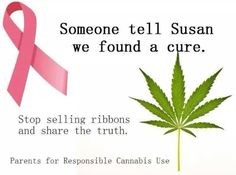
Indeed. I grow weary of seeing these pink ribbons all over the place demanding more research into cancer when a cure has already been discovered. (Hint: and cannabis is not the only one.)
(NaturalNews) There is nothing quite so horrendous and heartbreaking as a baby with a malignant brain tumor, especially for parents and family. But at the same time, there is little as joyous and uplifting as seeing those tumors go away – and without the costly “assistance” of the corporate medical industry.
Recently, the father of an eight-month-old baby decided he would shun traditional radiation treatment and chemotherapy and instead push for an alternative treatment using cannabis oil. The baby’s physician, Dr. William Courtner, who was initially skeptical earlier in his career about medical cannabis, has since seen such impressive results with it that he’s a big believer and a staunch advocate.
And the baby, by the way, was a huge reason for his conversion.
“They were putting cannabinoid oil on the baby’s pacifier twice a day, increasing the dose… And within two months there was a dramatic reduction, enough that the pediatric oncologist allowed them to go ahead with not pursuing traditional therapy,” Courtney said in an interview with The Huffington Post.
At four months the tumor had completely disappeared, and after eight months of treatment, the brain architecture and tissues were completely normal, making the toddler a “miracle baby” in Courtney’s words.
Editor’s note: I can really relate to this one! I have been training myself this past year to pay attention to my body when I’m around others. When I do, I notice in my belly if this is someone I vibe with or not. I have a couple of neighbors who are absolutely unbelievable deeply inauthentic and man, when I see them that inner radar in my belly goes off. As the article states, it is excruciatingly painful!
BEING AROUND INAUTHENTIC PEOPLE IS CLOSE TO EXCRUCIATING, IF YOU’RE AN EMPATH.
By definition, empaths are emotionally sensitive people who absorb the emotions and feelings of others- even the ones other people don’t know they’re emitting. Sounds like an exhausting job, right? Well, imagine being able to soak up all of those feelings, and being around a fake person. It’s perplexing, frustrating, and yes, excruciating, for an empath to be around an inauthentic person.
Have you ever spent time with someone who seemed quite pleasant and kind on the surface, but when you were physically near them you felt…gross? You could barely form a sentence; you immediately went from ‘okay’ to ‘blah’. In a manner of speaking, this is because your empathetic antenna is picking up on something that just isn’t right. You know that what you are seeing and what is really going on doesn’t match- and that usually means someone is hiding something.
Highly sensitive people need honest, deep, meaningful relationships with others. If you’re not genuine, they’re not up for the relationship.



 (RT)
(RT)

 (NaturalNews) There is nothing quite so horrendous and heartbreaking as a baby with a malignant brain tumor, especially for parents and family. But at the same time, there is little as joyous and uplifting as seeing those tumors go away – and without the costly “assistance” of the corporate medical industry.
 BEING AROUND INAUTHENTIC PEOPLE IS CLOSE TO EXCRUCIATING, IF YOU’RE AN EMPATH.